"I've started to look inwards a lot"
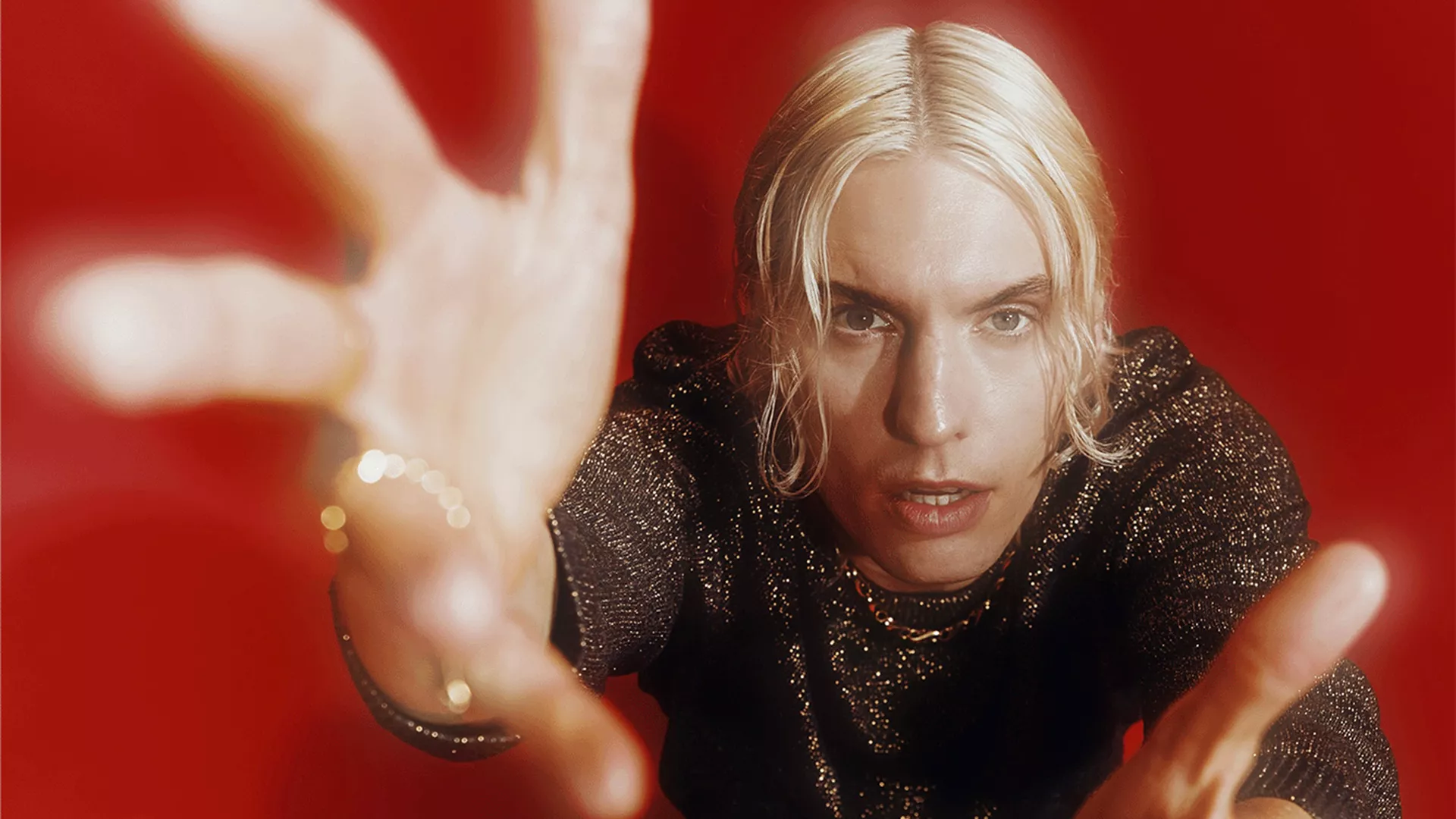
Mattias Kolstrup, former lead singer of the rock band Duné, has been making his own solo music since 2018 and has found a new life path. Here he prioritises his mental health.
"For the first many years, I did absolutely nothing to look after my mental health. I just let myself drift along. I was very young and successful early on, so I didn't have much perspective on life," says Mattias Kolstrup.
He was already on his first European tour in the middle of high school when his career really took off. And with it came a life full of speed, parties and lots of alcohol. It was all part of the lifestyle as a young artist in a rock band.
"Everything was new, exciting and fun. We had each other in the band. And it was really strong. But when you're a teenager and you're surrounded by free alcohol all the time, you get really good at drinking really fast and drinking a lot of it without realising it," says Mattias Kolstrup.
He often felt pressure to drink more.
"I was by no means an alcoholic. But people would say to me directly: "You need to step it up and drink more." And I sat there feeling like I should be drinking myself into a stupor without really wanting to. It's completely fucked up. Because it comes with a misguided superficial idea of what rock'n roll is."
Running into a wall
Today, the 34-year-old artist has put the cork in the whisky bottle and has cut down on alcohol significantly.
He now works as a singer and songwriter on his own solo project, lives in Copenhagen and married musician Drew Sycamore around the time the band broke up. He has gained more perspective on life. Over the past four or five years, the fast pace, parties and high alcohol levels have been increasingly replaced by a healthy diet, exercise and a curiosity to find out who he is.
"Around the time the band stopped, I hit a wall. I realised that I needed to do something different with my life and made some drastic choices. Now that I'm a solo artist, and also just getting older, I've started working out, eating healthier and drinking less," says Mattias Kolstrup, who has just released a new single and will release a new album this autumn.
Perhaps the album will have a greater focus on inner core values. In any case, Mattias Kolstrup, who grew up in Skive, has started to cultivate his spiritual side more.
"I've started to look inwards a lot. Some would call it spirituality. I'm still so Jutlandic that I have a mixed feeling about that word. But I've started trying to understand myself and get to know myself. It's relatively new to me. I'm talking to smart people who know about it, reading books about it and trying to observe myself and understand what my core is. I've been milling along in this life since I was very young. But now I need to get my core on board so it doesn't just become a shell," he says and adds:
"It also reflects back into my professional life. Because what I do for a living is actually converting emotions so that people can understand it and relate to it."
A gHiking can give new perspectives
He has become better at reminding himself that making music should also be fun. In the past, he has been more fear-driven in his process of making music, focusing more on the goal of creating music than enjoying the process itself. But he is now on the other side of the fear. And walking in the city and nature helps him with that.
"I mostly walk around the city, but also in the countryside when the opportunity arises. After all, it's the best. It clears my head and gives me a inner peace. This has become extremely important to me. One of the best things you can do is to observe your own thoughts and reaction patterns from the outside to understand why you react the way you do in different situations. It's well done on a walk - with nothing in your ears and no phone. By observing your thoughts, you can break free from anxiety and instead be creative and have fun with what you're doing," says Mattias Kolstrup with a smile.
"Now it got a bit ....spiritual. On a more practical level, I'd say it's important to have days off too, it can feel like you're not getting anywhere when you're off, but it also does something good for your mental health. After a few days off or a week's holiday, you come back to work with a lot more spirit and perspective."
He encourages friends and colleagues who work every day of the week to remember their days off.
"Things don't necessarily get better by spending a long time on it. I've tried many times to spend an extremely long time on a song. But it was actually the one I spent five minutes on that was the best. Because it was the most immediate."
SoMe is parked on A social media phone
One of the things that can affect him negatively is social media, which he feels consumes his time. That's why he recently made a choice and bought an extra phone. It's just for social media.
"I can feel how it drags me down mentally. Being on social media makes me feel worse. But it's also a work tool that I need to be on, which is why I've separated it," he says and continues:
"The culture of comparison has been taken up a thousand fold on social media. And one of the worst things that has happened to musicians' mental health is that you can see the number of streams under the songs. Maybe you've put a lot of time and heart and soul into your project and then it's there, in black and white and on public display, that you've only got very few streams. It can easily become negative. And it has consequences for your musical life and mental well-being. I'm at peace with it myself. But especially as a new, young and hopeful artist, it can be really hard."
A healthy music industry
He returns to reflect on how mental health has become a more natural part of his working life as he has grown older and spent many years in the industry.
"I've gained more perspective on life. I've met a lot of people and seen some of the same stories repeat themselves. But I've also met people who have inspired me in this direction. And that's important, because it can be difficult to recognise your own bad habits," says Mattias Kolstrup, who also encourages bands and artists to seek professional guidance.
Because mental wellbeing isn't necessarily something that just happens.
"You should actually go to couples counselling, even if you get on well together. Because it can happen very quickly that you go from being good friends to the whole business side of things, and you forget to talk to each other. I've seen it so many times. And I've experienced it myself."
He believes that it should be a natural part of the contract with your music company that you as a band or artist should see a coach, therapist or other professional with knowledge of mental health challenges every six months or a year.
"It will make your career more sustainable. It will also benefit the record label. Because they are also interested in a return on their investment. And at the same time, it will create a healthier and better music culture," he says, adding:
"We really could have used that during our time as a band. Also to learn more about ourselves."
This leads him to suggest that the industry's increasing focus on mental health is the way forward. And that more music companies are also offering their artists health insurance.
"But I think you have to be forced to the trough. Because often the people who need it most are not the ones who seek it out. It's often those who are very much in touch with developing that part of themselves, or someone who has already completely fallen through, who end up seeking these things out," emphasises Matthias Kolstrup.
"Whether you grew up on the streets of Nørrebro or just arrived on the four-train from Jutland, we can all learn a lot from looking inwards. There's also a huge creative potential in that."