
"Many mental health problems are rooted in poor pay and working conditions"
The balance is in work that is well paid and has good working conditions. The opposite, but which is fun, develops and keeps creativity alive. And that balance does something good for her mental health.
"The most important thing I've learnt in recent years is to turn down jobs where the working conditions and pay are too poor for what I can handle. I also make sure I'm not too busy, because I've often had a lot to do."
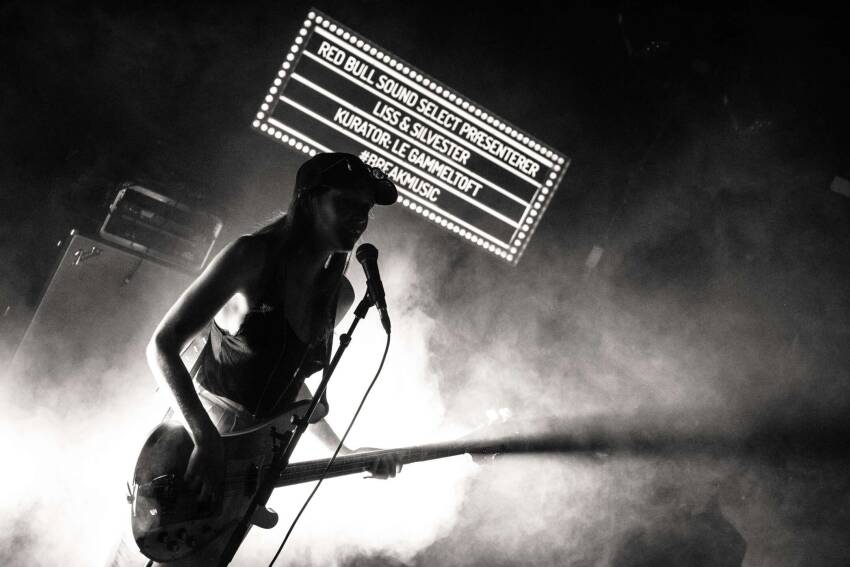
So says 36-year-old Ida Duelund, a composer and bassist who has worked for many years for other artists including Jomi, Jada, Hanne Boel, Soleima and Folkeklubben. She is also the co-founder of the band Lueenas, which writes music for films and releases albums.
"As a bass player, I've realised that there's not much to negotiate when it comes to salary. If I get DKK 2-3,000 in pay, it's not worth the preparation and travelling to and from a venue that might be in Jutland and takes 12 hours to get there and back. If it's not my own music with percentages in Koda, it's really bad business," says Ida Duelund.
"My employers, the artists, just don't always have the budget to be an employer in a sustainable way. I've had to learn to say no, so I only have a certain quota of these kinds of jobs. And that's been difficult, because it's often projects that I find musically really exciting. But I can only do it occasionally as a hobby, and something I do because it's fun and develops me. There's no economy in it whatsoever. If I have a bit of it, I love it. Because the people I work with are often extremely wonderful."
During the periods when she has made a living from such jobs, things have gone wrong and her mental health starts to deteriorate.
"Then I go down with stress. I get too exhausted and I'm not happy. There's nothing I'm really looking forward to, even though I think it's all great in principle. I don't get enough sleep, I don't have any energy, and I'm probably not very nice to be around either."
The right balance
The game is different when she works as a composer and makes music for film, dance and theatre. For her, mental health is about finding the right balance between the two types of work so that she can earn money on the big and exciting projects, but also have time and space for gigs.
"As a composer in the film industry, I'm in a completely different negotiating position. It's much easier to negotiate for more money if, for example, the producer's budget is not related to the fact that I might have to hire some artists and musicians. In this industry, I've experienced a different understanding and culture around salary and working conditions. So I work a lot as a composer in the film and theatre world," she says and continues:
"I've had to set my own terms. Because film people and directors don't know how long it takes to write music. They come from a different industry, so it's not their job to know what it costs. And that's how it should be, no matter what industry you're in. If I hire an electrician, it's also their job to tell me how much it costs to have electrical work done at my place. I'm not the one who knows anything about it."
She returns to her work as a bassist - and the times when she has been most stressed.
"I love playing bass. And I love being on stage, and I've had some really nice employers. They just haven't always been able to give me the conditions they wanted to. Because artists are under a lot of pressure. And for me, it's a long and winding road to the people who control the money, which might be a booking agency, a venue with funding or similar. But as the responsible composer on a feature film, I have direct contact with the producers. And they're the ones who control the money."
Ida Duelund is now in a position where she can plan her working hours where, as she puts it, she doesn't work 70 hours a week and still earn a good living. And she has enough to do. Therefore, she can prioritise tasks and tries to always have some space in her schedule, so she can say yes to interesting spontaneous tasks.
"It gives me peace of mind that I have my work schedule under control."
Life in the creative streams
When Ida Duelund is working on a major project, such as writing music for a feature film, she likes to have a detailed plan for her work. And it's important for her mental wellbeing that she also has time set aside to make music that "doesn't need to be used for anything" - and that has nothing to do with the big project.
"I might start at nine o'clock every morning, and I know exactly what I'm going to do that day and when I'll have lunch. And it's really important for me to dedicate some of the working day to basic research - music that won't be in the film," says Ida Duelund.
"I usually spend the first hour or so immersed in music I'm interested in, where I'm completely free. I might want to stand and play some Bach on my double bass or write some music. It keeps the creative juices flowing."
Together with close people
To safeguard her mental health, she also prioritises seeing people who are in her close inner circle. She has started taking one or two days off a week to spend time with people who don't care if she's good at music - family, siblings, her boyfriend and old friends.
"I think it's very important. Because life is about existence, life and death. There's so much more to life than my bass playing. It's great to be good at playing bass, but it's also really cool to realise that your worth in the world has nothing to do with how good you are at anything."
There is so much more to life than my bass playing."
She also tries to live a healthy lifestyle, with sleep, exercise and a healthy diet. She's always done that. But she doesn't really want to talk about it much. Because she doesn't think it's as relevant to the topic of mental health as it is to talk about salary and working conditions.
"I run and do some gymnastics in the morning. It does something good for my mental well-being when I prioritise it. For example, I've always run when I've been on tour," says Ida Duelund.
"But sometimes I'm a little reluctant to talk about it. Because I think a lot of mental problems in the music industry are rooted in structural issues like working conditions and pay. So when you start talking about exercise and diet, it's very easy to turn mental problems into something individual. That's what many of my good artist colleagues do for a living. So if you also beat yourself over the head with the fact that you're not exercising enough, it just makes things difficult."
Canoe Will the marriage last?
She is pleased that there has been so much debate about mental health in the music industry. And to some extent, she also thinks it's good that more music companies are sharpening their focus on the mental aspect.
"It's been a long time since I've been an artist on a major label. But I wonder if they also look at salary, or if they still ask a young artist in their early 20s who can't make a profit yet to bring a five-piece band. It can easily cost the artist more than 20,000 kroner. And I imagine that can cause a lot of stress," says Ida Duelund.
She believes it's important that the big companies don't push the terms too hard. "A more long-term view of being an artist might be better if you want a healthier culture. Artists don't have to peak within two years, maybe it's better if they only peak after ten years.
"And maybe it's also good if a new young artist is only asked to take one musician on tour. Then there aren't so many expenses from the start. It's a bit like when you're about to start a family. If you get married and immediately buy a huge house in Gentofte, you'll have to pay a crazy rent before you have a job that can pay for it," Ida Duelund concludes.
"What a lot of pressure to put on that marriage - from the very beginning."